
How Energy Travel Management Simplifies Remote Crew Scheduling
Explore how energy travel management streamlines remote crew rotations, coordinates accommodation bookings, handles last-minute schedule changes, and helps energy companies manage workforce travel more clearly.

Managing crew travel across remote energy projects requires accurate scheduling, suitable accommodation, and clear communication. Energy companies often struggle to coordinate rotating shifts, last-minute project changes, and lodging arrangements across distant locations. Effective energy travel management helps organizations organize workforce movements, reduce booking complications, and maintain visibility over accommodation requirements. For Calgary-based energy businesses operating across Alberta, a structured approach can simplify travel coordination and support smoother project operations.
Table of Contents
- How Energy Travel Management Improves Remote Crew Scheduling
- Common Travel Scheduling Challenges in Remote Energy Operations
- How Travel Management Software Simplifies Crew Coordination
- Choosing Suitable Accommodation for Remote Field Teams
- Practical Strategies for Managing Remote Workforce Travel
- Conclusion
Remote drilling sites, pipeline projects, and maintenance facilities frequently require employees to work extended rotations away from home. When accommodation bookings and crew schedules are managed separately, unexpected changes can create confusion and additional administrative work. Centralized travel processes help coordinators organize reservations, monitor expenses, and respond more efficiently to changing workforce needs.
How Energy Travel Management Improves Remote Crew Scheduling
A structured energy travel management process connects employee schedules, accommodation reservations, and project requirements through coordinated planning. Instead of relying on separate spreadsheets, phone calls, and booking confirmations, travel administrators can keep accessible records of upcoming crew rotations.
For example, a Calgary-based energy company managing operations near Fort McMurray may need accommodation for employees working alternating shifts. When departure dates change, coordinators must adjust room reservations and communicate updated arrangements.
Centralized information makes these changes easier to identify, helping teams coordinate accommodation requirements without repeatedly reviewing disconnected records.
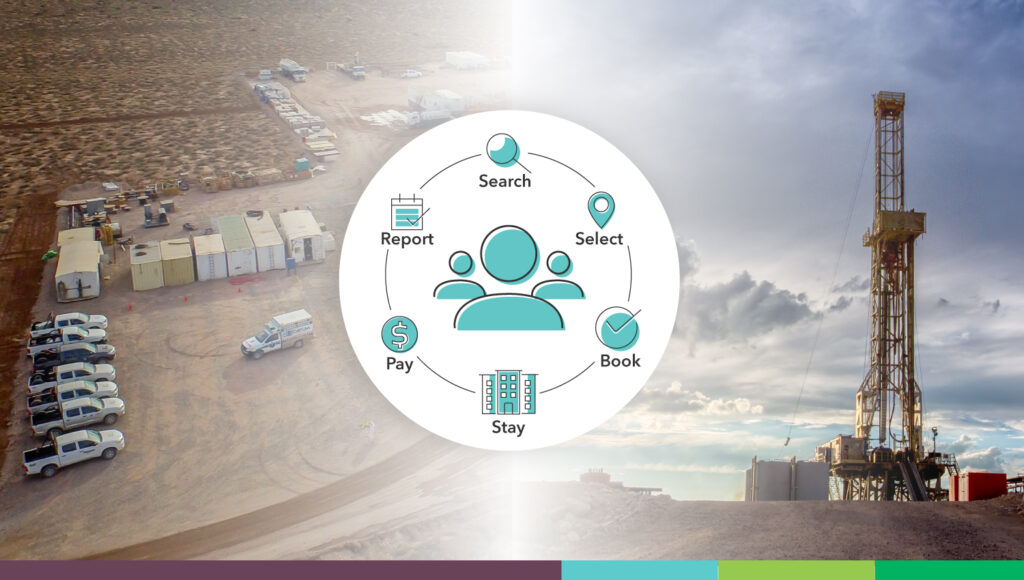
Why Energy Travel Management Matters for Rotating Field Crews
Remote energy operations often involve overlapping crew rotations, where one team completes its assignment while another arrives. Poor coordination can result in duplicate reservations, accommodation shortages, or unnecessary spending.
An organized scheduling process supports several operational activities:
- Crew Rotation Planning: Match accommodation dates with approved shift schedules.
- Schedule Adjustments: Coordinate room changes when project timelines shift.
- Expense Tracking: Monitor accommodation spending across multiple sites.
These practices help project supervisors and travel coordinators maintain consistent arrangements across different work locations.
Common Travel Scheduling Challenges in Remote Energy Operations
Remote energy projects often operate far from major population centers. Limited accommodation availability, seasonal demand, and changing workforce requirements can complicate booking arrangements.
Understanding these challenges and preparing suitable responses in advance is essential for maintaining smooth project schedules through professional support for energy sector travel management.
Limited Accommodation Availability
Oilfield and pipeline operations may take place near communities with relatively few hotels or extended-stay properties. During major construction or maintenance periods, accommodation demand can increase significantly. Planning helps coordinators identify suitable options, review reservation conditions, and arrange rooms before large crews arrive.
Unexpected Project Schedule Changes
Weather disruptions, equipment repairs, and revised operational timelines can affect planned employee departures. For instance, a project originally scheduled for ten days may require an additional two days because of equipment delays. Travel administrators must then confirm whether they can extend existing accommodation.
Accurate booking records and clear communication help teams respond quickly, although extensions remain subject to room availability and property policies.
Multiple Work Locations
Energy companies may coordinate employees across Calgary, Grande Prairie, Fort McMurray, and other Alberta communities. Different project locations require separate accommodation arrangements, transportation planning, and workforce schedules. Consistent booking procedures help administrators manage these requirements without unnecessary duplication.

Need help coordinating crew lodging or workforce travel? Contact LodgeLink to discuss booking needs, ask questions, and explore practical accommodation options for your energy projects.
How Travel Management Software Simplifies Crew Coordination
Accommodation bookings, employee information, and expense records can be managed through centralized travel management software. This reduces the need to handle individual reservations using scattered emails or spreadsheets.
Centralized Booking and Crew Information
Digital platforms let authorized coordinators review reservation details and identify upcoming accommodation needs.
Some workforce-focused systems support bulk bookings, employee list uploads, and reservation changes, helping organizations coordinate larger groups more efficiently.
Flexible Accommodation Arrangements
Project schedules can change with little advance notice. Booking tools that support reservation changes let coordinators request extensions, adjust guest assignments, or cancel rooms when needed.
However, cancellation terms, additional charges, and room availability depend on individual booking conditions.
Improved Expense Reporting
Centralized reservation records help finance teams review accommodation spending by project, department, or location. Consolidated invoicing and reporting tools can also simplify reconciliation, allowing managers to identify booking patterns and assess potential cost-saving opportunities.
Choosing Suitable Accommodation for Remote Field Teams
Accommodation selection directly affects travel convenience and workforce comfort. Employees working extended rotations may require practical amenities that differ from those expected during short business trips.
When arranging oilfield crew housing, coordinators should examine several important factors:
- Distance between accommodation and the project site.
- Parking facilities for work vehicles and larger trucks.
- Availability of meals, laundry services, and kitchen facilities.
- Flexible check-in arrangements for rotating shifts.
- Clear reservation, cancellation, and extension policies.
Consider accommodation rates alongside transportation requirements and employee schedules. For example, selecting a lower-priced property farther from the work site may increase daily transportation costs. Reviewing the overall travel arrangement helps organizations make more informed booking decisions.
Practical Strategies for Managing Remote Workforce Travel
Organizations can improve travel coordination by establishing clear scheduling procedures and keeping workforce information up to date. When assessing workforce travel solutions for energy sector projects, managers should prioritize booking visibility, flexible accommodation, and clear communication.
Maintain an Updated Rotation Calendar
Create a shared schedule containing crew assignments, work locations, arrival dates, and expected departures. Review this information whenever project supervisors approve changes.
Assign Clear Booking Responsibilities
Identify who can request accommodation, approve reservations, and authorize changes. Defined responsibilities help reduce duplicate bookings and prevent communication gaps.
Review Lodging Requirements in Advance
Estimate accommodation needs before major crew rotations or scheduled maintenance activities. Early preparation gives you more time to review properties and booking conditions.
Monitor Accommodation Costs
Regularly review booking records to identify unused reservations, recurring expenses, and rate differences across project locations.
Use Industry-Specific Booking Features
Energy-focused booking tools can support practical requirements such as crew-list uploads, group reservations, truck parking filters, and consolidated reporting.
For example, LodgeLink provides workforce accommodation booking capabilities designed for energy-sector operations, including bulk reservations, crew scheduling tools, and access to properties serving remote project locations.

Frequently Asked Questions
How does centralized travel planning improve crew scheduling?
Centralized planning connects employee rotation schedules with accommodation records. It helps coordinators identify booking conflicts, manage changes, and communicate updated arrangements.
What challenges affect remote energy crew travel?
Limited lodging availability, changing project schedules, long travel distances, and overlapping workforce rotations can create coordination challenges.
Can digital booking tools help reduce travel expenses?
Digital tools improve spending visibility and support reservation management. Actual savings depend on accommodation rates, cancellation conditions, and booking decisions.
Why is advance accommodation planning important?
Early planning gives coordinators more time to identify available properties, review reservation conditions, and arrange lodging for incoming crews.
Conclusion
Effective energy travel management simplifies remote crew scheduling by connecting accommodation planning, workforce rotations, and travel expense monitoring. Centralized booking information helps coordinators respond to schedule changes, reduce repetitive administrative tasks, and maintain clearer communication across project locations.
For Calgary-based energy organizations managing operations throughout Alberta, consistent travel procedures and suitable accommodation choices can support more efficient workforce coordination. Combining advance planning with appropriate digital tools provides a practical foundation for managing changing project requirements.
Coordinating accommodation for remote energy crews across Alberta? View LodgeLink’s location on Google Maps for business details, or explore online energy-sector travel solutions to review crew booking and workforce accommodation options.